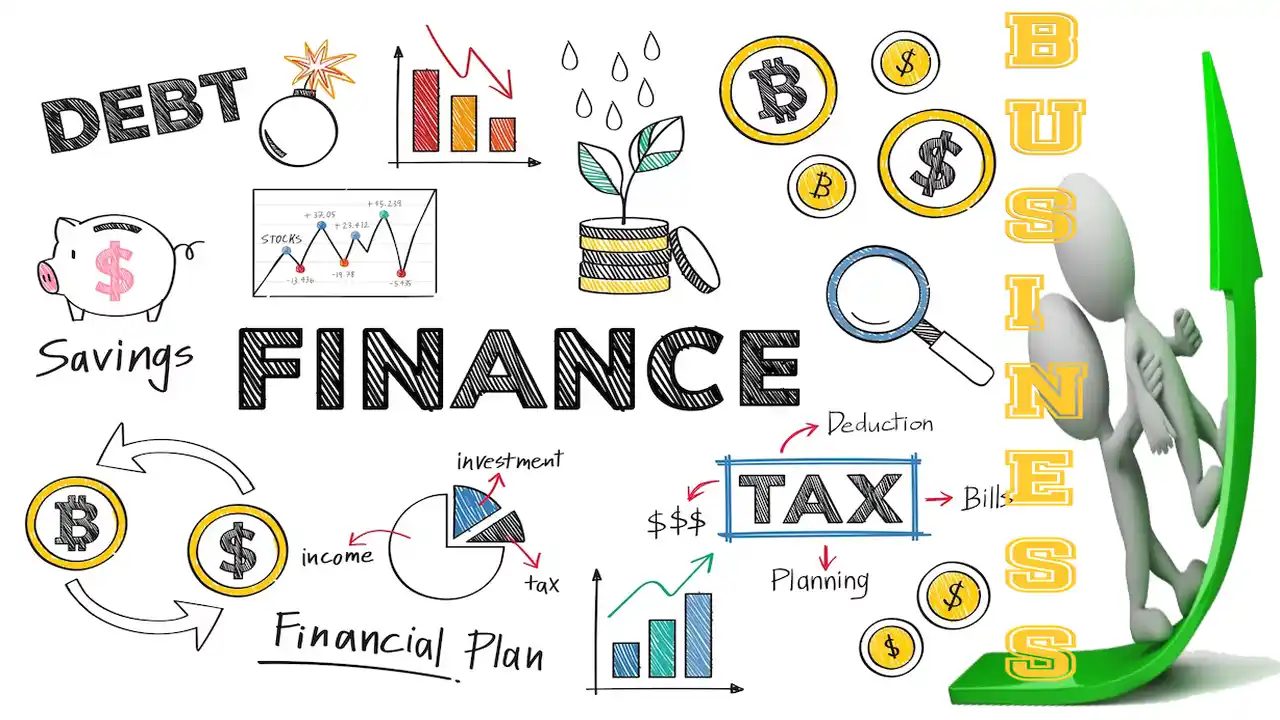
There needs to be a separation of the five steps used to explain financial records. A financial statement details the income, expenditures, assets, liabilities, and equity of a company. A company’s assets are its possessions that have the potential to generate income. Most companies have a designated financial manager whose job it is to oversee the budgeting and planning of the company’s funds, as well as the development and implementation of financial plans and the optimal allocation of those funds to meet the company’s financial objectives. Continue reading to become an expert on components of financial management and learn everything you should know about it.
Threats to an organization’s financial resources can be identified, assessed, and mitigated through the three phases of risk management. Financial risk management is seeing potential threats, determining how likely they are to materialize, and then coming up with plans to mitigate or eradicate them. A “financial decision made” describes the process by which an organization chooses its spending priorities. The process includes identifying and evaluating possible investment possibilities, figuring out how to pay for those investments, and keeping an eye on the dangers connected with such assets.
Components of Financial Management
Planning, arranging, directing, and overseeing monetary operations, including receiving and spending funds, is what financial management is all about. Financial administration and financial management are interchangeable terms. Applying general management techniques to the firm’s money is necessary to achieve this. Given below are a few points on components of financial management that you should know before you think of money, investing, business and managing it.
Controls
Goals are achieved or risks are managed by putting controls in place, which are based on adopted and implemented procedures and policies. Among the many protocols are those for the security of sensitive property data, the administration of human resources, the granting of permission, the distribution of authority and responsibility, the division of labor, the use of two signatures, and other similar measures. Consequently, there needs to be enough controls in place to ensure efficiency so that everything runs according to plan at all times. Additionally, they must to be comprehensive, reasonable, and connected to the main objectives of the person using the budgeting tool in line with the cost-benefit concept. Every level of the company and every employee working with the budget must adhere to the established controls.
Managed Setting
Among all the components of an internal control system, the control setting is crucial. It helps create a calm and organized work environment, which influences the effectiveness of the main internal controls. It makes changes to the processes that are vital to the organization’s functioning in order to develop its plan and goals. Control environment affects workers’ awareness of its significance. Integrity, ethics, management philosophy, style, organizational structure, HR policies, and employee skills constitute the control environment.
Financial Manager’s Duties
The number of duties given to each position in financial management is proportional to the size of the business. For smaller organizations, one person may handle the majority of the financial management responsibilities. So, these tasks are usually carried out by an entire team or a number of roles collaborating in bigger businesses.
Data and Link Management
Having access to accurate information and keeping lines of communication open are critical for process control. Managers should ensure timely, appropriate, and reliable communication of change announcements, both internally and externally. You can’t make good decisions based on shaky facts, as Shtopodrazbira pointed out. All of the data should be up-to-date, accurate, suitable, and simple to find.
Reporting Finances
The second most important part of managing money is accounting. For the duration of the program, it is responsible for keeping accurate financial records of all outlays. The purpose of fund accounting is to record the monetary inflow and outflow of an organization. Each year, grantees of the Housing and Urban Development (HUD) program use these books. The rules that all accountants are required to follow are known as GAAP, or Generally Accepted Accounting Principles. To become a certified public accountant, you must also complete these requirements. Using standardized accounting practices can bring about more openness and consistency. Moreover, the money from the grant has to come from the right place, and it has to be used on approved things. Appropriate individuals should approve all expenditures. It is vital that the accounting records match the paperwork.
Financial Planning
As it lays out the anticipated expenditures for different projects and the entire company over a given time frame, budgeting is a crucial part of financial management. This is because it helps with financial planning. Unit, project, and program sales and expenses must be factored into the budget-making process. Because it compares actual expenditure demands to expected expenses, budgeting also guarantees that spending is equitable. Include budgets in contracts for clarity on required funds and allocation.
Making Plans
In order to keep the business profitable, it is the financial manager’s job to predict and anticipate the company’s financial performance in the future. Money management and investments with a longer time horizon may figure into their strategy. On top of that, they could be planning the company’s growth or making other strategic decisions that affect the bottom line.
Keep an Eye on
An effective system for tracking and evaluating internal controls is essential for keeping them in sync with the ever-evolving objectives, assets, and threats faced by the budget user. This is because internal control is an ongoing process that needs to adjust to new information and circumstances. To monitor and appraise, we carry out routine actions, also known as continuous tracking. Both metrics, examination, and implementation require separate and distinct contexts.
Managing Risks
Managing risk entails finding potential threats to an organization’s objectives, studying them, and then coming up with a plan to deal with them. Multiple processes come together to form a risk assessment. The process begins with the identification of risks and continues with their analysis and prioritization. Then, controls and other solutions are developed to address these risks.
Investment Agreement
One of the most crucial documents for your accounting and finance team is the agreement stipulating the amount of money your organization will receive from the donor. Standard terms and conditions for an agreement include: The donor and the NGO mutually agree upon a comprehensive inventory of all outcomes. To avoid future confusion, it is necessary to separate the quantitative and qualitative findings. The amount allotted for each task should be clearly and simply stated in the agreement. By doing this, you will be able to avoid spending more than what was actually supplied to you. Understanding the components of financial management is crucial for effective fiscal planning.
FAQ
Why is a Financial Problem Important?
If you are in debt of any kind and can’t pay it back, we say that you have financial problems. You can’t buy as much goods when you’re in debt, and managing your money becomes a real pain.When you’re already struggling financially, it’s even more stressful when you can’t pay all of your bills. Someone needs to figure out a way for people to pay back their loans.
Why is it Crucial to have Financial Literacy?
A solid understanding of money management can advance various life goals such as saving for education, retirement, controlling debt, and running a business. Essential components of financial literacy include the ability to create and stick to a budget, save for the future, manage debt, and monitor expenditure.
What is Sound Financial Decision-making so Crucial?
Individuals with strong decision-making skills and a solid understanding of financial concepts are more likely to make smart financial decisions. Budgeting entails settling on a spending and saving schedule, doing price comparisons before a major purchase, and setting aside funds for retirement or other distant objectives.
Final Words
Financial management involves monitoring a company’s profits, overall financial health, objectives, operations, and creative endeavors. Planning comprises decision-making, regulation, organization, and direction. Whether the goal is to maximize profits or grow, effective management is essential. Team success relies on each member understanding objectives and their role. Identify your goals, acquire necessary tools, and choose a suitable plan to shape your strategy. This guide covers the components of financial management. Explore the website to keep learning and developing your knowledge base with additional useful resources. Read this comprehensive guide for more information on goals of financial management issue.