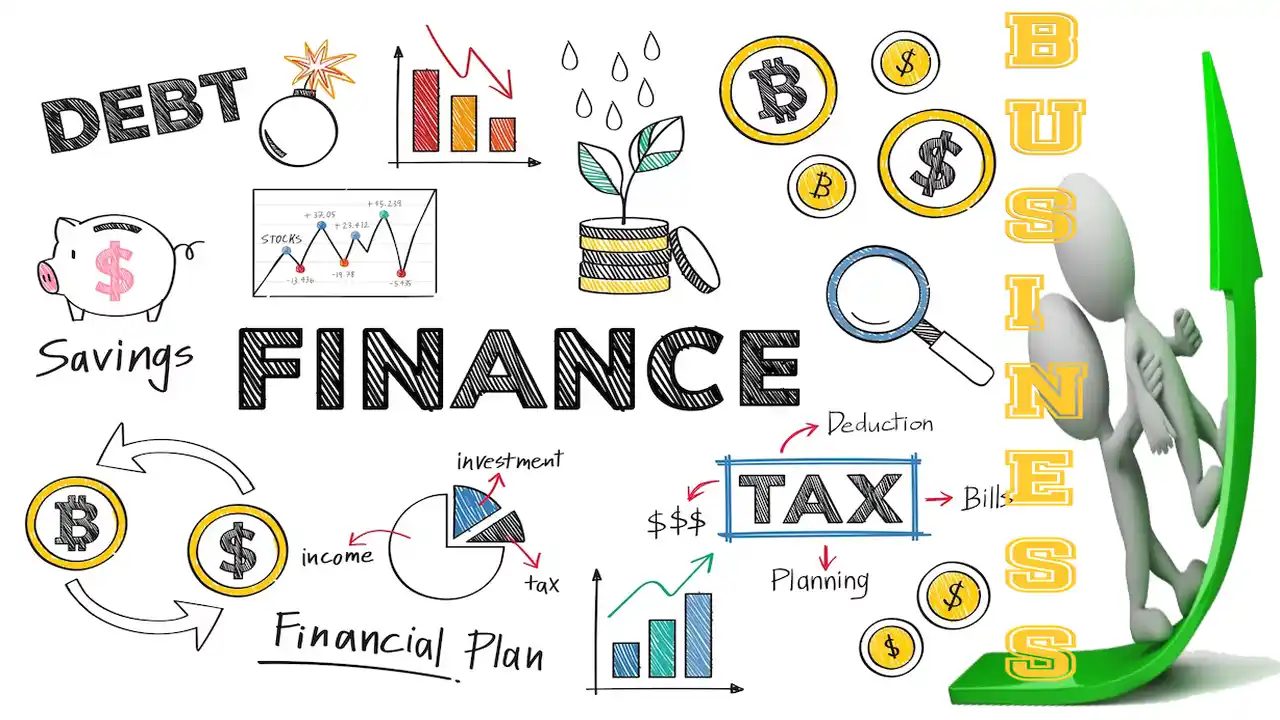
You need good risk management skills to succeed in long-term investing. Investors who are willing to take calculated risks in search of the most highly volatile, high-beta stocks have the potential to reap enormous rewards in the long run. In comparison to the S&P 500, stocks with betas greater than 1.5 are typically 50% riskier. The share price can see huge swings in a short amount of time due to this volatility, which could put off potential investors. Continue reading to become an expert on risk of stocks and learn everything you should know about it.
When you put your money into investments, you get to decide how it is spent. For the purposes of this definition, “risk” is any uncertainty about your purchases that could put your financial stability at chance. The value of your home could go up or down depending on the market, which is known as market risk. Your investment value could decrease if a company decides to merge with another or enter a new market. Consideration of a business threat causes this to happen.Notably absent are
Risk of Stocks
Investing involves inherent risks, and expecting quick profits without accepting substantial risk is doubtful. Real success and respectable financial gain are within your reach if you know how to control your expectations and the risks you’re willing to accept. Achieving your goals and making a stable living are not mutually exclusive, either. Investing successfully and consistently over time is possible for those who are knowledgeable about risk management in the stock market. Here are a few things you should know about risk of stocks before you think about money, investing, business, or management.
Financial Setback
There are a lot of factors that might cause stock values to change drastically. One must be mentally prepared to lose all of their investment when trading stocks. If you are not planning to spend for a long time, this is really significant. Using leverage, such buying on margin or selling short, increases the risk of losing more money than you initially invested in a stock transaction.
Star Rating
Every single business has access to a crucial piece of data regarding credit ratings. The interest rates that a business must pay on loans are directly related to its credit rating. Having said that, there is another metric that is equally important—if not more so—than the credit rating for publicly listed companies. According to the expert, this is the grade. It would indicate that the market reacts strongly to changes in expert opinion regarding stocks. Positive or negative, when experts revise their evaluations, the resulting swings are often far larger than warranted by the circumstances that prompted the revisions.
Interest Rates and Inflation
For the sake of this discussion, “interest rate risk” means the problems that arise for businesses seeking financing whenever interest rates go up. It is getting more and more difficult for them to keep running their business as interest rates climb. Inflationary periods can devalue a company’s revenue as higher interest rates increase financing costs. Rising costs may deter consumer spending, despite companies being better positioned to pass on the increases. Stagflation is a possible outcome of weakening consumer spending, rising inflation and interest rates, and other economic headwinds.
Expiration Date
Not many companies make it to the hundred-year mark, and those that do never stuck to the tried-and-true methods of doing business. Someone might find a way to make a comparable product for less money, which is one of the biggest risks of obsolescence. Worldwide, businesses are becoming more tech-savvy, which means the knowledge gap is shrinking and the likelihood of obsolescence is rising.
Legislative
To be more precise, it’s the risk that investors may see their investments in a particular company or industry curbed as a result of regulatory action. To be more precise, the real danger could show up in many forms, such as antitrust lawsuits, new regulations, taxes, and so on. Legislative risk is something that all organizations have to deal with, even if it varies from industry to industry. In an ideal world, the government would mediate disputes between businesses and their constituents. Companies that put people in risk and show no signs of wanting to change their ways often find the government stepping in to help. Too much legislation is often passed by the government.
Legislation shapes both the attention each representative receives and the public’s perception of the government’s significance. The level of legislative risk that is actually necessary rises sharply due to these extraordinary rewards.
Model
When accurate models fail, it has a negative impact on companies that depend on them. Troubled or bankrupt companies affect others that depend on them, creating a domino effect. This scenario illustrates the consequences when risk exposure models fail to quantify variables effectively. The mortgage crisis of 2008–2009 was the time this happened. Investing in stocks carries inherent risk.
Major Announcement
Due to the ever-present news cycle, every company faces the threat of media risk. Any company’s stock price would have dropped in response to news of the Fukushima nuclear tragedy, for instance. Everyone from uranium miners to Americans who use nuclear power falls into this category. A single negative report may cause investors to punish a specific firm, a whole sector, or perhaps both. Major negative news, like the debt crisis in multiple Eurozone countries, has a discernible effect on the world economy. Not only can this kind of news hurt stocks, it may hurt entire economies.
Searching for
The buried bodies in the backyard may go unnoticed until later by the inspector, compliance program, regulator, or other relevant entity. This is known as the risk of detection. Whether it’s senior management embezzling funds from the company, exaggerated results, or some other form of financial fraud, the market will react when word comes out. Restoring the organization’s reputation could be challenging, and if the deceit was pervasive, it’s possible the company will never recover. This is because there’s a chance that you might be found out.
No Return Guarantees
Even if stocks have done well over long periods of time, that doesn’t mean you’ll always make money when you invest in them. The future performance of a stock cannot be predicted, but there are several pieces of information that may be used to assess a company. In addition, the company may or may not increase prices or distribute dividends. Or just the fact that a company might be able to stay in operation.
Value of a Good or Service
One definition of “commodity price risk” is the potential effect on a company’s bottom line from fluctuations in product prices. Companies make more money when product prices go up, but they lose a lot of money when prices go down. Contrarily, the opposite is true for companies whose revenue is dependent on commodities. But even businesses that don’t deal with commodities are vulnerable to commodity risk. The service sector is not immune to the effects of a generalized slowdown in consumer spending when prices of goods and services go up.
FAQ
Is there any Advantage to Investing?
The goal of investing is to get a return on your investment (ROI) over time. Put your money to work for you, and it can outpace inflation. Compared to other types of investments, compounding and the capacity to trade off risk for return are the main reasons why investment returns can grow faster.
What are some Ways to Minimize Investment Risk?
Determine your comfort level with risk, maintain a healthy cash reserve, employ the asset allocation method, diversify, diversify, diversify, invest in blue-chip stocks, do your homework, and monitor your portfolio often.
How does One Measure Risk in Comparison to One’s Potential Reward?
One is the idea that there is no separation between risk and profit. The odds of an investment losing money are higher, but the odds of it making a lot of money are also higher. Similarly, the possible return on an investment will be lower if the risk is lower.
Final Words
In addition to bear markets, the stock market is susceptible to temporary fluctuations. Granted, stock market returns have been generally favorable over very long time frames. If you invest money into stocks that you might need soon, you might have to sell them if their price drops. What this means is that buying high and selling low will lead to financial loss. Summing up, the topic of risk of stocks is of great importance in today’s digital age. If you’re interested in learning about disadvantages of stocks, this post is a great place to start.